Every parent dreams of watching their children speak confidently, read fluently and write with ease.
But many kids struggle to remember English words when they are not in class. But at the heart of all these skills lies one simple yet powerful foundation: Vocabulary.
Building a strong vocabulary is essential for children as it enables them to express their thoughts clearly. Developing these skills takes time and requires consistent exposure, regular practice, and ongoing encouragement.
Further, building a robust vocabulary is not just about knowing more words, but also about enhancing skills that impact their communication, comprehension, and overall academic success.
In this article, we explore effective ways on how to increase English vocabulary in kids, making the learning process both fun and rewarding.
Why is Vocabulary Building Essential for Kids?
Words are the building blocks of communication. A good vocabulary helps children grasp new concepts faster by making reading, writing, and communication easier.
In addition to reading and writing skills, a strong vocabulary enables a child to articulate thoughts, ideas, and emotions clearly and confidently. It enables a child to form and manage relationships, engage in class and other discourse confidently, and manage social interactions. Moreover, studies have shown that every new vocabulary exposure adds to a child’s literacy development and overall performance in school.
Proven Strategies to Improve English Vocabulary in Kids
To help child expand their vocabulary, here are some of the proven strategies that parents can employ:
1.Read Aloud and Engage Actively
Parents should encourage their children to read books that introduce new words not often heard in daily conversations.
Select books that use language beautifully and that encompass numerous subjects. While reading, engage in vocabulary by pointing to illustrations, asking questions, and expounding meanings. Active participation helps a child connect the word with the meaning and the context that they have heard, read, and spoken the word.
2.Model Talk and Encourage Conversations
Children are always learning from their surroundings. Conversations offer a great opportunity to introduce new words.
Talk to your children frequently about everyday activities, engage in daily conversations, and ask open-ended questions like what happened at school, which encourages children to express themselves and learn new words.
3.Repetition and Retrieval Practice
If your child learns a new word, they need to encounter it more than once. Experts generally agree that, typically, a child needs to hear a new word 4 to 12 times to help them remember.
Revisit the word of the day, ask your child to recall it and use it in sentences.
4.Word Games and Interactive Activities
Board games such as Scrabble and Boggle, or even “I Spy”, turn vocabulary learning into fun challenges and are a great way to discover new words. Word searches can also introduce new words and provide conversation-starters.
5.Visual Tools and Word Walls
For visual learners, creating a “word for the day” or a “vocabulary list” is effective.
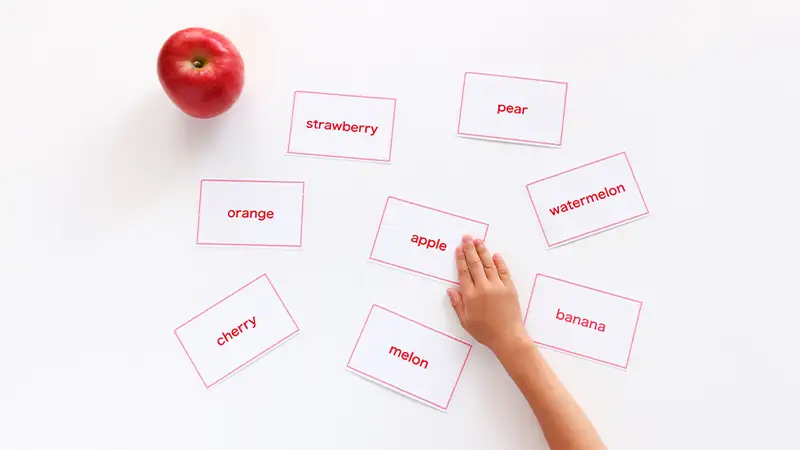
You can create a word wall in a child’s room with pictures and matching words or use flashcards. This visual support helps them connect the word with its meaning.
6.Vocabulary Journals and Word Lists
Encourage your child to keep a vocabulary journal where they can write down new words they find, their meanings, and a sentence using each word. Writing and using new words helps with memory.
7.Use of Media and Technology
Educational apps, audiobooks, and cartoons designed for kids can enrich exposure to good vocabulary words. Many of these resources are specifically created to introduce new vocabulary engagingly and contextually.
Best Practices for Parents and Educators
Parents and teachers should foster a love of reading, engage in daily conversations using rich language and consistency to build a strong and lasting vocabulary.
Here are some of the best practices:
1.Blend Fun with Learning Rigour
Children learn best when there is an element of fun. By incorporating playful activities with repetitive learning, you can be sure that they will remain motivated and focused.
2.Monitor and Reinforce Learning
Pay attention to the new words your child learn. When they use a new word correctly, offer positive reinforcement. If they use it incorrectly, guide them toward the right meaning and usage.
3.Consistency Beats Intensity
Spending a few minutes of focused vocabulary work each day is more effective than long, irregular sessions. Make vocabulary building a small, consistency part of your daily routine.
4.Tailor to the Child’s Context
Personalise your child’s learning experience by using vocabulary that is relevant to your child’s interests, hobbies, or daily life. For example, if your child loves dinosaurs, introduce new vocabulary words related to palaeontology.
5.Encourage Word Consciousness
Make children curious about words. Urge your child to ask, “What does that mean?”
This simple act of curiosity can help them become lifelong learners.
Conclusion
Building a strong vocabulary is a journey; it needs consistency, creativity, and encouragement. Whether through a word of the day, a vocabulary list, or word games, the goal is to make learning a fun activity.
At Chrysalis Kids, one of the best preschools & play schools in Whitefield, Bangalore, we offer a nurturing and stimulating learning environment grounded in play-based, skill-focused pedagogy.
Our curriculum blends academic richness with the development of soft skills, creativity, critical thinking, and communication, which are crucial for strong vocabulary and expression.