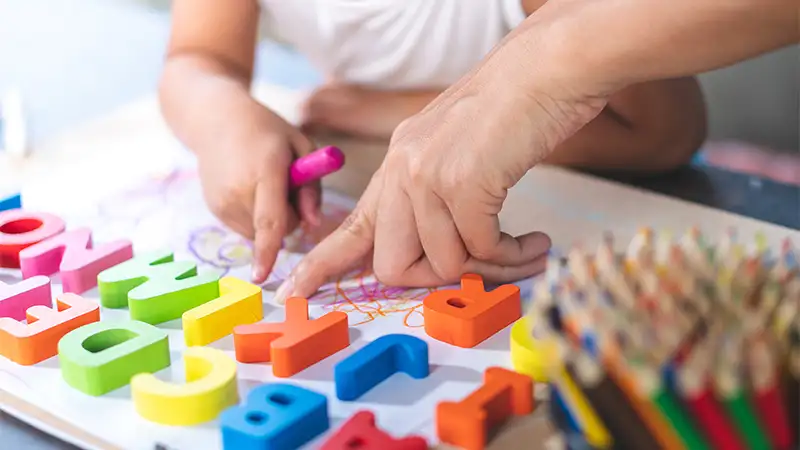
Phonics is often spoken about in early years classrooms, but many parents still wonder what it really means and why it matters. You might hear terms like phonic words, phonics learning or reading phonics, but how do they help a child develop literacy?
At Chrysalis Kids, one of the leading preschools in Whitefield, Bangalore, we see phonics as a cornerstone of early education. It’s more than just a reading technique; it nurtures confidence, curiosity, and lifelong learning skills. Let’s take a closer look at what phonics is, why it’s important for preschoolers, and how parents and teachers can make it an enjoyable part of a child’s development.
What Is Phonics?
Phonics is a method of teaching children to read by linking letters to their sounds. For example, the letter c represents the sound /c/, while the letters sh together make the sound /sh/.
This knowledge enables children to decode new words by sounding them out, rather than relying on memorisation.
Examples of phonic words include:
- c-a-t → cat
- sh-i-p → ship
- th-i-n → thin
In short, phonics equips preschoolers with the skills to unlock written language and become confident readers.
Core Components of Phonics
Effective phonics instruction involves:
- Letter–sound recognition – linking letters with their sounds.
- Blending – joining sounds together to form words.
- Segmenting – breaking words down into their individual sounds.
- Irregular or “tricky” words – recognising words that don’t follow usual phonics rules, such as said or one.
These building blocks give children a systematic and practical approach to reading.
Why Phonics Matters for Preschoolers
Establishes Literacy Foundations
Phonics provides the stepping stones for fluent reading and writing. Once children grasp phonics words and sound patterns, they gain the confidence to approach storybooks, classroom texts, and beyond.
Builds Confidence and Motivation
Figuring out a new word may seem small, but it’s a powerful achievement. Each success fuels self-esteem, encouraging children to read more frequently and with greater enthusiasm.
Strengthens Language and Cognitive Development
Engaging with sounds sharpens listening, memory, and focus. Through teaching phonics, children also develop clearer speech and a better understanding of how language works.
Offers Long-Term Academic Benefits
Evidence shows that systematic phonics instruction improves not only reading fluency but also comprehension and writing skills, advantages that carry into later schooling.
When and How Preschoolers Learn Phonics
Signs a Child Is Ready
Children usually begin phonics between the ages of three and five. Signs of readiness include:
- Curiosity about books and print.
- Recognising some letters of the alphabet.
- Enjoying rhymes and sound play.
- Attempting to read or mimic words.
Features of Effective Phonics Learning
High-quality instruction is:
- Structured – introduced in a clear, logical sequence.
- Engaging – using rhymes, songs, and games.
- Meaningful – linked to everyday reading experiences.
Parents and Teachers: A Shared Role
Teachers introduce systematic phonics lessons, while parents provide reinforcement at home. Creating a print-rich environment and encouraging word play can make a significant difference.
Practical Tips and Activities
Phonics Games
- Sound Hunt: Ask your child to find objects beginning with a certain sound (b for ball, book, bag).
- Flashcards: Practise blending to form simple phonic words.
- Rhyming Games: Explore word families such as cat, hat, mat.
Reading Habits That Support Phonics
- Read aloud daily, drawing attention to sound patterns.
- Let children attempt to sound out familiar words.
- Re-read favourite books to reinforce recognition.
Creating a Fun Environment
Phonics should never feel like a test. Celebrate small wins, keep sessions short, and focus on enjoyment to nurture a positive association with reading.
What Research Tells Us
Research from organisations such as the National Literacy Trust confirms that systematic phonics is one of the most effective ways of teaching children to read. Studies show that children who learn through phonics develop stronger comprehension and achieve higher literacy outcomes than those taught by other methods.
If you’re searching for the best play school for kids, it’s worth considering whether phonics is part of their curriculum. It can make all the difference to your child’s future confidence as a reader.
Conclusion
Phonics is more than a set of classroom exercises, it’s the key to unlocking literacy, communication, and a love of reading. From developing confidence to shaping long-term academic success, the importance of phonics cannot be overstated.
At Chrysalis Kids, we make phonics fun, engaging, and effective, helping children grow into confident, independent readers.
Schedule a visit today to see how our phonics-rich environment supports your child’s learning journey.